

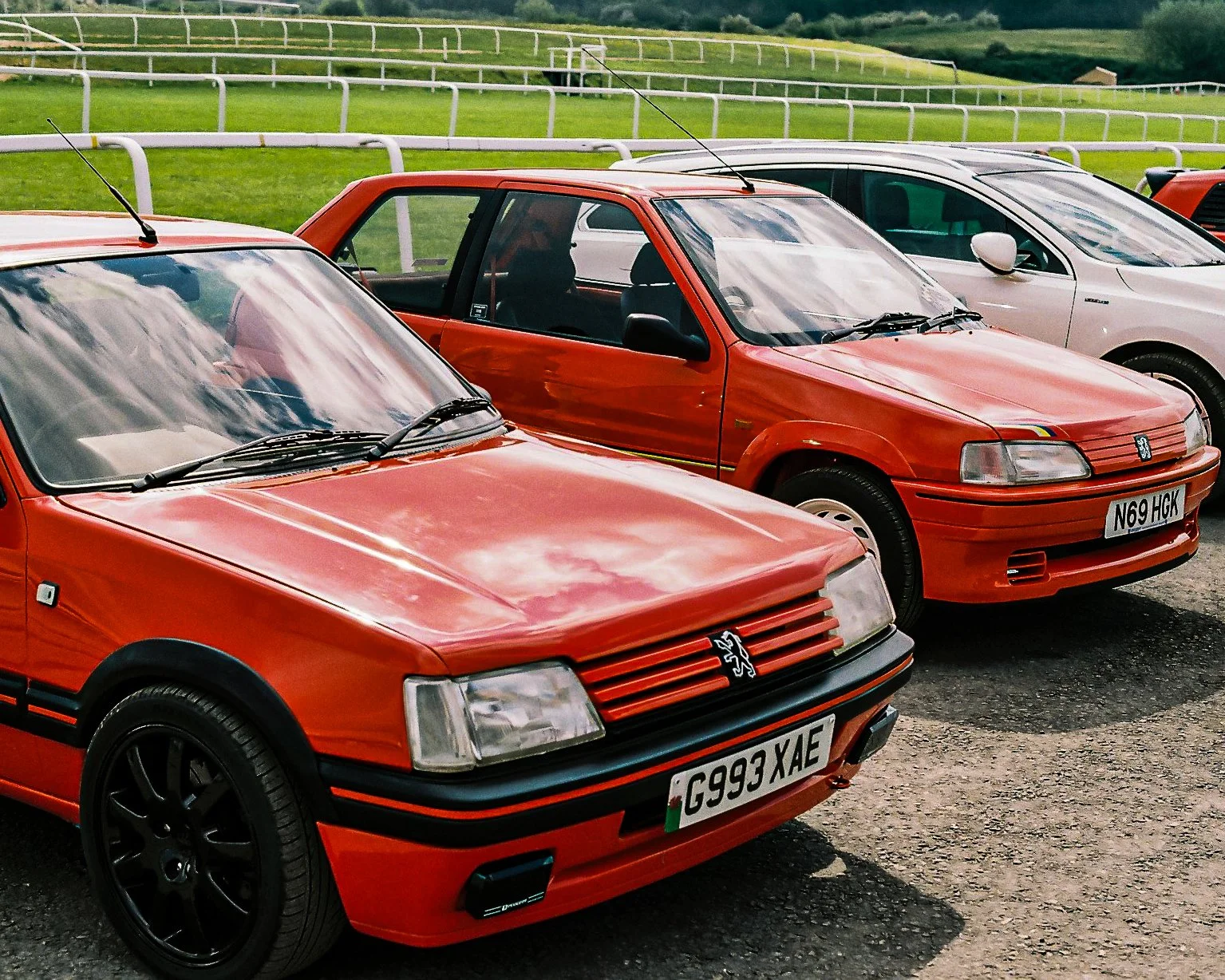
Photo by Sam Singleton
Over the past few years there has been an increase in the size of cars and at the same time manufacturers have been choosing to ditch their smallest models in favour of larger ones. Take my former employer Ford, for example.
A few years ago they got a bee in their bonnet (pun intended) and decided that the reasonable thing to do for the future of the business would be to stop making one of the best-selling models of all time.
So, Fiesta was no more, but not to worry. If you wanted a hatchback you could still get the slightly larger Focus… until you couldn’t. And that then left the Puma as the new smallest car in the Ford range.
If you are unfamiliar with the Puma, though small for an SUV, it certainly feels considerably larger than the Fiesta that came before it.
Before anyone races to Google to tell me that a Focus is longer than a Puma, I know. I've driven these cars practically every day. I worked for TrustFord, Ford's own dealer group, and I can tell you that a Puma feels like a much bigger car than its dimensions might suggest. It's taller, you're sitting higher, and it has that wonderful knack of making an ordinary trip to the shops feel like you've brought a small shed with you.
Bigger cars, smaller choices
Now, I'm not against SUVs. If you want one, buy one. My issue is that the manufacturers seem to have decided that everyone wants one, and they're slowly taking away the alternative.
There was a time when you could walk into a showroom and choose between a little runaround, a sensible hatchback, an estate and something bigger. Now you walk in and choose between a crossover, a slightly bigger crossover and an electric crossover that costs what a perfectly respectable family car used to cost plus a holiday.
And it's not as if somebody's been widening the roads to accommodate all this. The lanes around Bristol haven't got any more generous, supermarket parking bays certainly haven't, and garages were apparently designed at a time when people expected to put cars in them rather than boxes of Christmas decorations. You can add as many cameras and parking sensors as you like, but they won't make two cars fit comfortably where they used to.
Some of this growth has perfectly sensible reasons. Modern safety standards, crash structures, technology, batteries, all of it can take up room. I'm a mechanic, I'm not going to pretend the answer is to build a 1988 Fiesta again and hope for the best. But there's a world of difference between making a car safer and deciding every new model needs to look like it could climb a mountain, even if the most adventurous thing it ever does is mount a kerb outside Tesco.
I've wondered for a while whether this was ever what drivers wanted, or whether the manufacturers just decided that's what they could sell us. Bigger car, higher seating position, a bit more road presence. Or, if you're being less charitable, a bigger price tag. A quick look around a modern showroom suggests there may be rather more money in selling crossovers than there is in making cheap little hatchbacks.
The small car comes full circle
The funny part is that Ford seems to be realising this might not have been the masterstroke it thought. Having killed off the Fiesta and then the Focus, it has now agreed to work with Renault on a pair of smaller electric cars. One is being widely reported as a Fiesta successor, based on the same small-car underpinnings as the Renault 5, with the first due in 2028. Ford hasn't officially promised us a new car wearing the Fiesta badge, but the direction of travel is fairly obvious.
Think about that for a moment. You make one of the best-selling small cars around. You stop making it because the future apparently belongs to bigger, more profitable vehicles. Then, a few years later, you turn to the French to help you build a small car again. I don't dislike the Renault 5, quite the opposite. I rather like the fact that Renault remembered small cars can be desirable while everyone else was busy sticking black plastic arches onto things.
Maybe there is some sense coming back into the industry. Perhaps people don't all need the same size car, and perhaps driving something compact doesn't mean you've failed at life. A proper small hatchback can be practical, cheap to run, fun to drive and easy to park. It doesn't have to pretend to be an off-roader to justify its existence.
I'm not saying big cars shouldn't exist. I'm saying small ones should. And if Ford does bring back the Fiesta, I'd love to know how many meetings it took to arrive at the conclusion that people might still want to buy one.
Apparently, the future of the small car might just be the small car. Who'd have thought?
