
Field Notes - September ‘26 - Apparently I Write Now
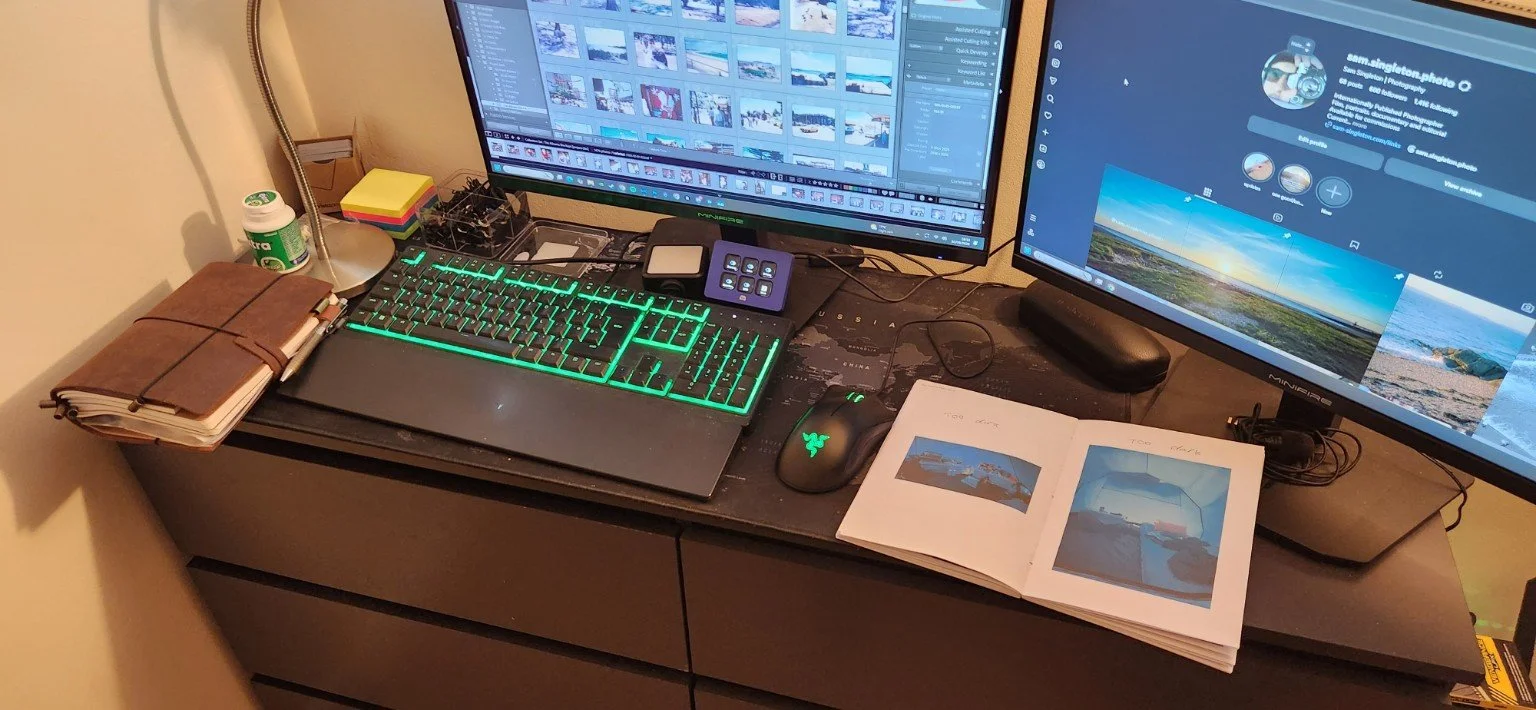
September’s desk: Lightroom open, notebooks piling up and the No Fixed Address dummy spread across the corner as the photography, writing and book work started to converge.
A few days into September, two people told me I could write. One of them edits a magazine. The other is my manager in a workshop.
I've always been good with words. Years ago I even considered whether writing might be something I could pursue properly, then, like several other sensible ideas, apparently filed it somewhere and carried on repairing cars. What had changed was that I'd already decided what I was trying to become: a photographer.
So writing had been demoted to supporting equipment. It was the thing attached to photographs when they needed explaining. Captions got longer. Project statements escaped containment. Emails turned into pitches. Occasionally an article happened because a set of pictures needed somewhere to live. Apparently this is how a skill you've had for years stops being hypothetical and starts sending invoices.
September began with No Fixed Address travelling further without me. On the first day of the month the Centre for British Documentary Photography published fifteen photographs from the project with my writing. That mattered for a reason which is difficult to explain without sounding precious about labels.
I became homeless for 23 nights this summer while still working full time as a mechanic. I photographed the car becoming a bedroom, the laundrette, the tent, work boots on a groundsheet and all the ordinary practical things that kept life functioning while I didn't have a normal place to go home to. The danger with work made from lived experience is that the experience can become more interesting to people than the work.
I don't want to spend the next decade being introduced as a homeless person who happens to take photographs. I'm a photographer who happened to become homeless. The order matters. The documentary feature felt like a small correction to that balance: the photographs were being looked at as photographs, and the writing beside them was being read as writing.
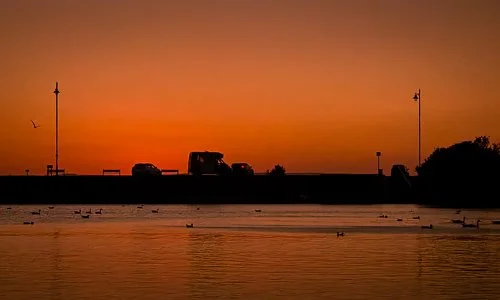
Last light over the water.
Then an editor came back about another article and said it was fantastically written. Later the same day my manager read the documentary feature and told me, independently, that the writing was genuinely good. Two completely different people reaching the same conclusion is difficult to dismiss as politeness. I tried anyway, but it didn't really survive the rest of the month.
Invisible People commissioned a piece about the practical work of concealing homelessness while staying employed. I quoted a proper fee, briefly wondered whether I'd become delusional, and they said yes. To the fee, not the delusional bit. The jury's still out on that. I filed it, they approved it and they accepted the photography terms I set.
Then a national newspaper commissioned another first-person feature, this time about Bristol's housing costs and what happens when somebody with a full-time wage suddenly has to replace a home. That one went through the less glamorous part of journalism too. Dates moved. Edits came back. I rewrote sections, sent photographs of myself despite longstanding concerns for the camera, answered follow-up questions and watched something that began as a speculative email become an actual piece of work.
Two paid pieces in one month is enough evidence to stop calling writing an accident. It is not enough evidence to resign from anything, and that distinction still matters. An interview isn't a publication. Interest isn't a commission. A promising email isn't income. Most pitches still vanish into silence. I've become boringly strict about this because the alternative is building an imaginary career out of things people might do.
The stranger change happened in the part of my life I've mostly wanted to leave behind. I've spent nearly sixteen years in workshops and, for most of that time, I've thought about the experience mainly in terms of escape. I like fixing things. I like diagnostics when there's time to actually diagnose something. I like the direct satisfaction of a broken car entering a workshop and leaving less broken. I'm less enthusiastic about quite a lot of the industry built around it.
This month I started treating that frustration as reporting access instead, which is a slightly grand way of saying I know what the job feels like from underneath a car rather than from a spreadsheet. I know what technicians complain about when management isn't listening. I know what productivity targets feel like from the ramp. I know why experienced technicians leave, why a diagnostic machine does not magically diagnose anything and why mechanics are often the last people who want to work on their own cars.
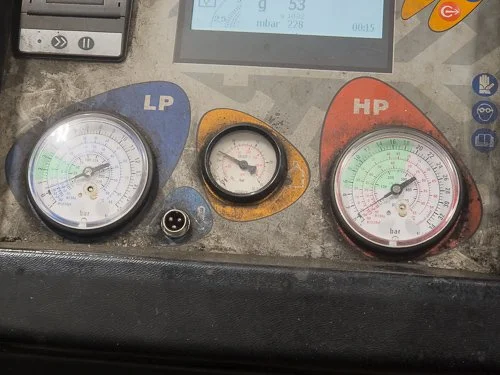
Diagnostics from the workshop floor.
So I started pitching automotive pieces properly, and one landed. Garage Talk Online published my first automotive byline, a short piece about why mechanics hate working on their own cars. It is not exactly the Pulitzer, but it was more useful than another plan in a spreadsheet. The lane exists now.
At the same time I was interviewing for other technician jobs, which forced a question I'd been avoiding: did I actually want another workshop, or did I just want out of the one I was in? One interview made another garage feel like a variation on the same problem. Another company made me a real offer, and by the end of the month I'd signed it.
That may sound like a contradiction in an essay about building a different career. I don't think it is. Photography and writing aren't paying my rent. Pretending otherwise would be idiotic. A better-paid job with a different employer doesn't cancel the work I'm building outside it. It gives me more room to build it properly.
More importantly, I no longer see the workshop as dead time between the life I have and the life I want. It's material. That doesn't mean turning every bad day into content or writing a revenge column every time somebody irritates me. Nobody needs that, including me. It means recognising that sixteen years of knowledge does not disappear just because I want my future to be bigger than the job that gave it to me.
No Fixed Address was moving in another direction at the same time. Towards the end of the month, an editor who had been given access to the photobook while considering the project for his own platform came back with a rewrite of the prose he wanted to use there. I made a small number of tracked changes, went back through the archive and sent the colour files he'd asked for.
The book now exists in enough of a form to be looked through, referred back to and used as a source when somebody wants to publish the project elsewhere. The work is starting to have a life beyond whichever single version of it happens to be in front of me.
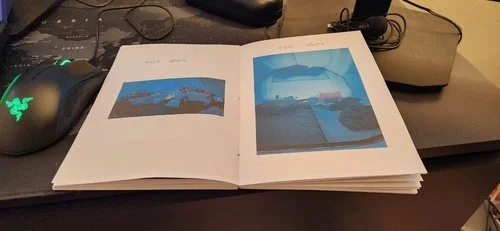
Working through the No Fixed Address dummy.
While that project was becoming more usable, the next one became less hypothetical. The Albums She Kept has spent a long time as an archive, an idea and a promise to myself that I would eventually do something serious with the photographs my mum left behind. By the end of the month I had submitted a funding application to support the next stage.
That sentence contains several months of work disguised as admin: scanning, cataloguing, research, budgets, travel plans and trying to explain what the project is before I've made the photographs that will eventually explain it better. There is every chance the answer will be no. That isn't the interesting bit. The interesting bit is that the project now has enough shape for somebody else to say yes or no to it.
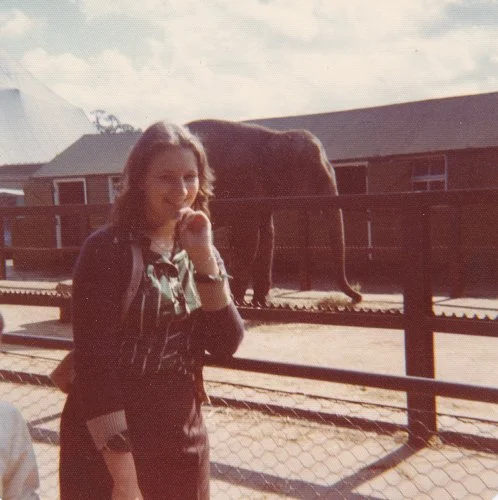
One of the photographs from The Albums She Kept archive.
September has been full of that kind of movement. Not reinvention so much as integration. The photographs led to writing. The writing led to commissions. Homelessness led to questions about systems rather than only my own story. The workshop became reporting access. The job I wanted to escape produced a subject I can write about from somewhere most motoring commentary never reaches. No Fixed Address kept developing as a book while also becoming source material for other publication work. The Albums She Kept became an application rather than a future intention.
None of this means I've arrived anywhere. There is no stable creative income. Most pitches still go unanswered. A small audience remains a small audience even when I stop refreshing it every fifteen minutes. I don't particularly trust grand transformations. They usually make better captions than lives.
What I do have is a clearer idea of what belongs together. Photography is still the centre. Writing is no longer something I can convincingly describe as accidental. Advocacy is useful when it leads back to real questions instead of simply asking me to repeat my own story. And nearly sixteen years in workshops are not years I have to throw away in order to become something else.
Apparently I write now.
Worse, I may have something to say.
God help us all.
Light breaking through over the sea.
Anyway, that's my rambling. If you made it this far, I apologise, and enjoy the rest of your day.
